
Fourteen kitchens.
One operations director.
Zero failed inspections.
A regional quick-service restaurant brand in central Michigan walked Platinum through their kitchens in late 2023 with a simple ask: make the hood program disappear from the operations director’s desk. Twelve months later, the program runs without him touching it. This is how the engagement was built and what the rolling-window numbers look like today.
- Client
- Regional QSR brand [name redacted under NDA]
- Locations
- 14, central Michigan
- Cadence
- Monthly hood compliance + quarterly fan service
- Engagement start
- October 2023
I.
The problem they walked in with.
The director who reached out had been at the brand for two years and inherited a hood program from his predecessor that wasn’t really a program — it was three vendors across fourteen stores, billed on inconsistent intervals, with paperwork scattered across three different email accounts and a shared drive nobody owned. Two of the fourteen stores had failed soft-inspections in the previous year. One had a small grease fire in the duct riser that didn’t make the news but did make the insurance carrier ask hard questions.
He wanted three things, in order. One: a single vendor across all fourteen sites so accounts payable could stop reconciling six invoices a month. Two: documentation he could surface to his insurance carrier and the local fire marshal without having to compose a forensics email each time. Three: the program to run without him being the project manager.
He’d already been quoted by two larger national vendors. Both proposals were structurally identical: a price per hood per month, a generic compliance promise, and a portal login. Neither vendor’s salesperson could tell him the difference between an NFPA 96 § 11.6.4 riser cleaning and an § 11.6.5 horizontal-duct cleaning. He took the call with Victor because someone in his industry forum had said “they actually know the code.”
II.
What we found in the first walk.
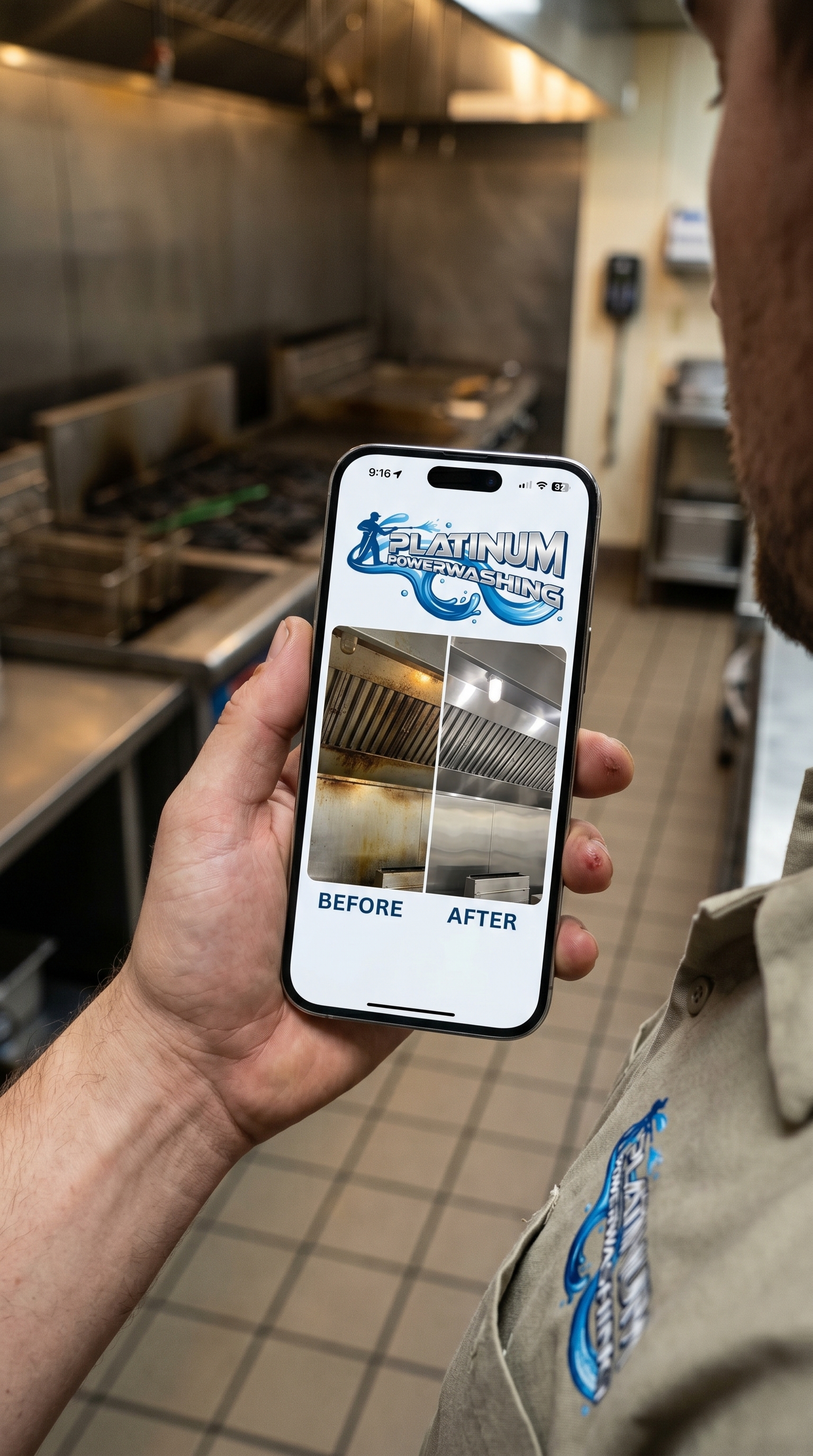
Platinum spends the first week of any multi-site engagement walking every kitchen with the senior operator and the GM. We took five days across the fourteen stores. We photographed each hood, each riser access point, each rooftop fan unit, each cleanout port, and each roof penetration. We measured baffle count, duct linear footage, and fan motor amp draw at every store. We logged what the as-built differed from the equipment listing on file with the local AHJ.
The findings, in summary:
- 6 of 14 stores had a missing or inaccessible cleanout port on the horizontal duct run. Required fabrication or relocation.
- 11 of 14 had at least one bent or corroded baffle filter that the previous vendor had been re-installing rather than replacing.
- 3 of 14 had grease leakage onto the roof membrane underneath the exhaust penetration. One was approaching a roofing-warranty conversation.
- 2 of 14 had no documentation of fan-belt service in the previous eighteen months. Both fans were running with belts the manufacturer would have replaced at twelve.
- 14 of 14 had a hood compliance sticker. None matched the most recent service date on the certificate filed with the fire marshal.
We sent the operations director the audit document on day six. It ran forty-one pages with photos. He sent it to his insurance carrier within the hour.
III.
What we put in place.
The program we proposed was deliberately boring. A boring program is a program a director doesn’t have to manage.
- A
One job ticket per store
Each store got a written account ticket: equipment listing, access protocol, baffle count by hood, cleanout-port map with fabricated additions, fan-unit make and torque spec, photo checklist, sticker placement diagram. Stored in the account archive. Updated when anything changes.
- B
One night per store per month
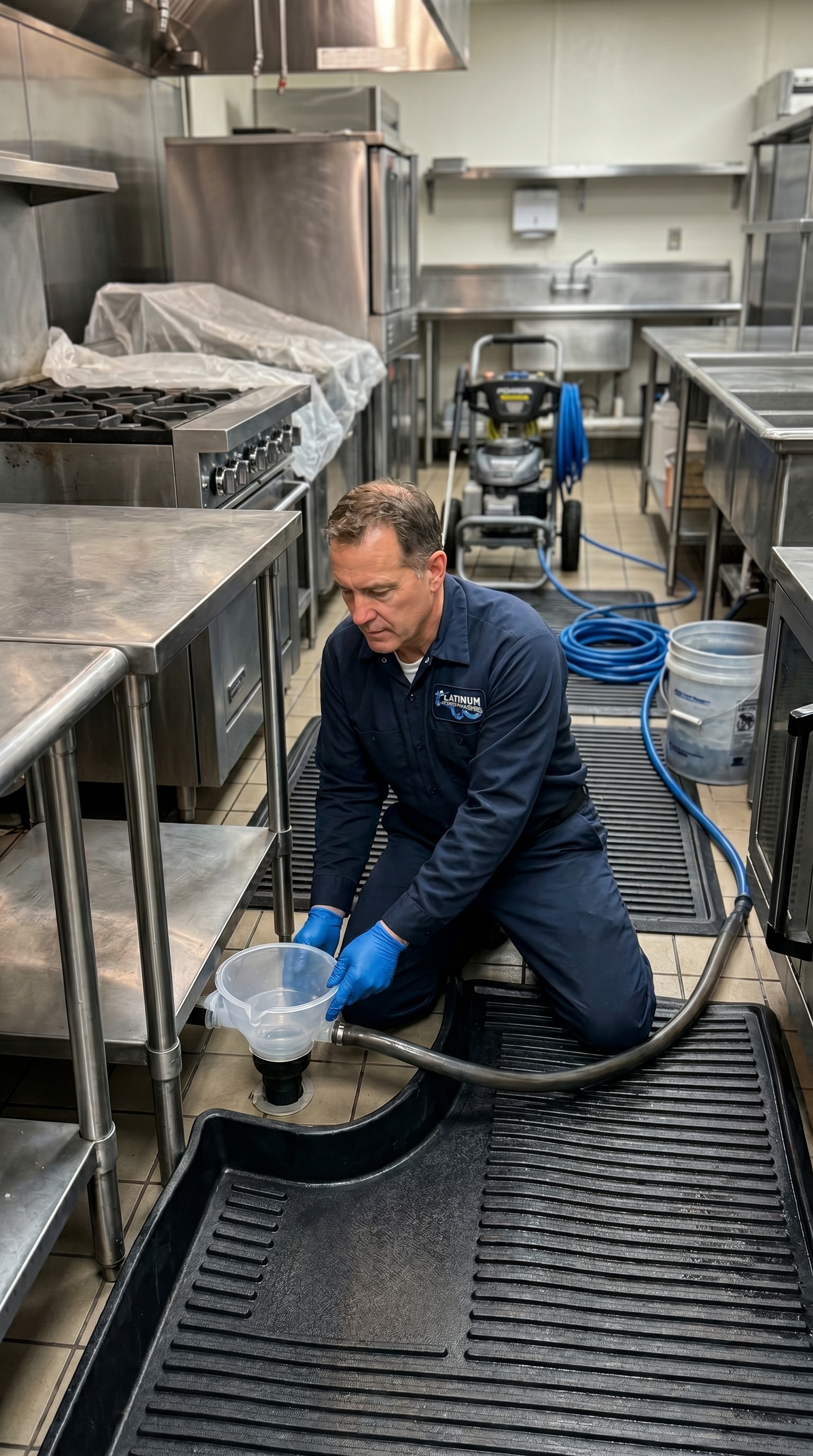
Service runs between 11pm and 4am — closed-kitchen hours. The crew rotates the route so the same operator isn’t at the same store more than three consecutive months; cross-coverage keeps the per-account knowledge distributed.
- C
One certificate, one photo packet, one sticker
Filed in the account archive before 7am the morning after. Emailed to the director, the GM, and the per-store kitchen manager. The fire-marshal copy filed within 48 hours of service.
- D
Quarterly fan-unit service, separately scheduled
The exhaust fan and roof penetration get their own quarterly cadence — bearings, belts, blade balance, containment media, membrane condition. Filed separately, surfaced separately.
- E
One quarterly review call
Forty-five minutes with the director and Victor. We bring the rolling-window numbers, any flagged items, and the insurance-carrier follow-ups. He brings the calendar and the budget.
IV.
Twelve months in.
These are the numbers from the most recent rolling-window review, as of the most recent quarterly call. They will be confirmed with Victor before the next public deploy of this case study. 1
- Hoods cleaned, rolling 12mo
- 168 (14 stores × monthly cadence)
- Photos archived
- ~11,200 (avg 67 per service)
- NFPA-96 certificates filed
- 168 (100% on-time delivery to AHJ)
- Quarterly fan services
- 56 (4 per store)
- Failed inspections
- 0
- Grease incidents
- 0
- Insurance-carrier escalations
- 0
- Vendor invoices for accounts payable
- 12 (down from ~72 across three vendors)
The result
Twelve months. Zero failed inspections. One vendor invoice a month, not six.
V.
A few things we’d do the same way next time.
Multi-site work is mostly logistics. The technical work is well-specified; the failure modes are calendars, communication, and the small details of who-knows-what across the team. Three decisions from this engagement we’d carry forward:
The audit document, with photos, before the proposal. Most vendors send a proposal and then audit if they win. We audit first and price the proposal against what we actually find. This costs us roughly a week of free work per engagement. It also means there are zero scope-creep surprises in month three, which is why we’ve never lost a multi-site account once we’ve started.
Cross-rotation across the crew, not single-operator ownership. Two of the larger vendors we replaced had been sending the same person to the same store for years. When that person was out, the account suffered. We rotate operators on a 90-day schedule across the route. No single account depends on a single operator’s presence to run correctly.
One emailed packet per service, not a portal. The director had been asked to use three different vendor portals in his previous role. None of them stayed logged in, none of them let him share with the insurance carrier without exporting, and none of them let him forward a single photo. We send a dated PDF. He forwards it. The carrier replies. That’s the loop.