Kitchen compliance · Kitchen exhaust cleaning
NFPA 96 Hood Cleaning Frequency Guide
Learn NFPA 96's 2024 kitchen exhaust inspection intervals, when grease buildup triggers cleaning, and what records and service scope should cover.
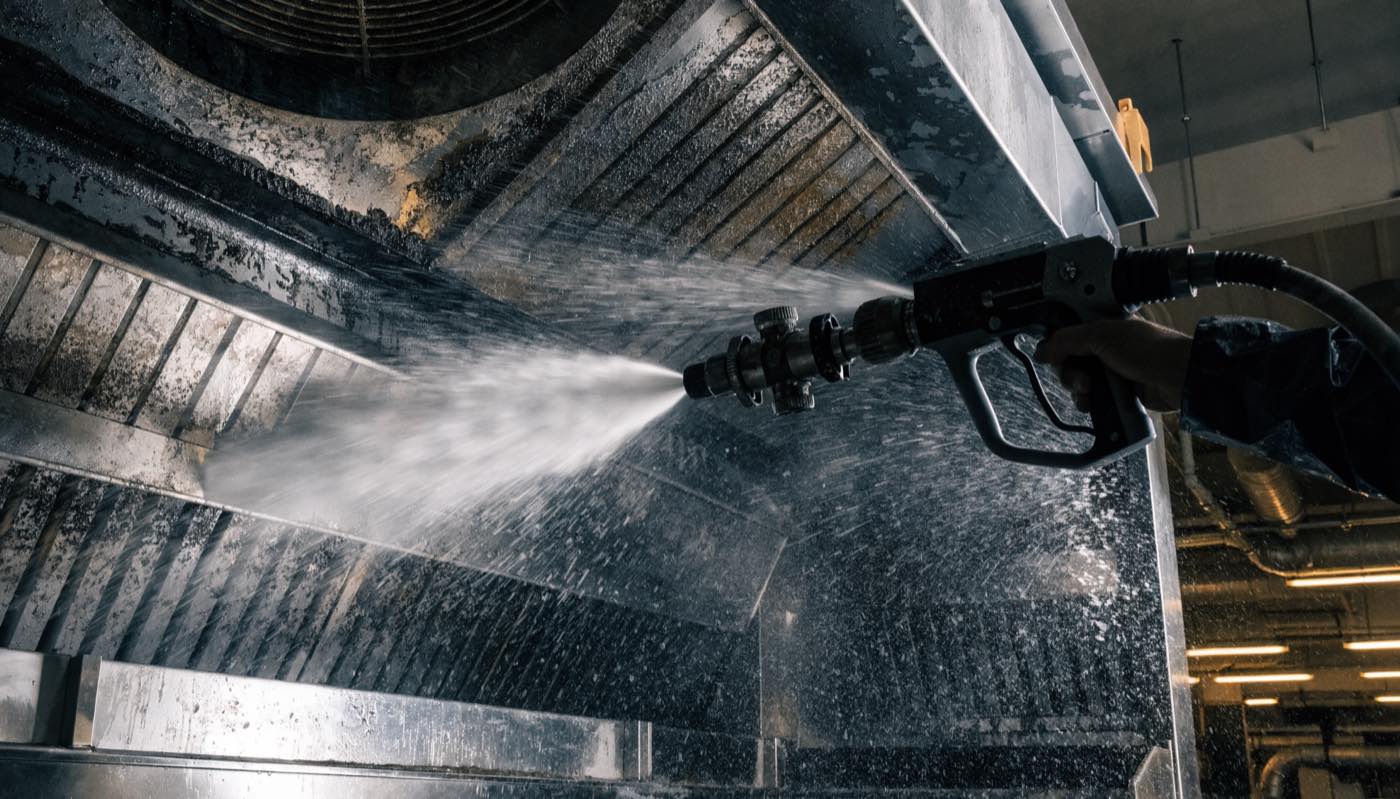
A fixed “hood cleaning every three months” rule sounds simple, but it does not accurately describe NFPA 96. The 2024 edition sets minimum inspection frequencies for commercial cooking exhaust systems based on the fuel and the volume or type of cooking. Cleaning follows when an inspection finds grease buildup that requires removal. The authority having jurisdiction (AHJ) can also impose or interpret requirements for the facility.
That distinction matters. A quarterly calendar may be appropriate for a busy charbroiler, but too slow for a solid-fuel operation and more frequent than the minimum inspection schedule for a low-volume seasonal kitchen. The sound approach is to classify the operation correctly, inspect at the required interval, document conditions, and clean according to what the system actually contains.
The NFPA 96 2024 inspection schedule
NFPA 96 groups systems into four inspection frequencies:
| Cooking operation served by the exhaust system | Minimum inspection frequency |
|---|---|
| Solid-fuel cooking operations | Monthly |
| High-volume cooking operations, such as 24-hour cooking, charbroiling, or wok cooking | Quarterly |
| Moderate-volume cooking operations | Semiannually |
| Low-volume cooking operations, such as churches, day camps, seasonal businesses, or senior centers | Annually |
These intervals tell you when to inspect for grease buildup. They are not blanket promises that cleaning can wait until the next listed date, nor do they automatically require cleaning after every inspection. When grease-laden deposits have accumulated to the point that cleaning is required, the exhaust system must be cleaned by people acceptable to the AHJ under the adopted code.
Local adoption also matters. A state or municipality may use a particular NFPA 96 edition, amend it, or apply related fire and mechanical code provisions. Your fire marshal, fire prevention bureau, insurer, or other designated AHJ may expect a different interval based on observed conditions. Treat the 2024 table as the code-based starting point, then confirm the rules that govern the site.
Classify the cooking, not the restaurant label
“Restaurant,” “school,” or “hospital” does not establish the inspection frequency by itself. Look at the appliances, fuel, menu, production hours, and grease output connected to each exhaust system.
Solid-fuel cooking receives the shortest interval because the process introduces distinct combustible deposits and fire hazards. High-volume indicators named in the schedule include 24-hour cooking, charbroiling, and wok cooking. A kitchen does not need all three. One exhaust line serving a heavily used charbroiler may need quarterly inspection even if another line at the same property serves lower-volume equipment.
Volume can change over time. Added shifts, expanded menus, catering production, seasonal peaks, or a new appliance can move a system into a different practical risk profile. Review the classification whenever operations change rather than carrying last year’s frequency forward without question.
Why the calendar cannot make the cleaning decision
Grease accumulation is not uniform. Two kitchens with similar hours can produce different deposits because of food, fuel, appliance temperature, filter condition, airflow, duct geometry, and staff practices. Accumulation can also vary within one system. The hood may look manageable while a horizontal duct run, elbow, fan housing, or discharge point holds heavier deposits.
OSHA’s food-service fire-safety guidance identifies dirty ducts as a possible flue-fire hazard and advises keeping grill and grill ductwork free from flammable residues. That practical fire-prevention message supports condition-based attention between scheduled service dates. Odors, visible grease migration, dripping, filter saturation, or changes in fan performance should prompt review rather than waiting for a calendar reminder.
A recurring service interval is useful for planning. It should be built from the NFPA 96 inspection category and adjusted when documented findings show deposits developing sooner. If repeated inspections show little accumulation, do not unilaterally extend beyond the applicable minimum. Discuss any proposed change with the AHJ.
Inspect the whole exhaust path
A hood face is only the visible beginning of the system. A useful inspection and cleaning scope identifies the grease-removal devices, hood or canopy, plenum, ductwork, access panels, fan components, and exhaust termination. The proposal should say which fan surfaces are included and how the fan will be safely opened or moved when its design permits.
Roof conditions deserve their own line in the scope. Grease can collect around an upblast fan, at the discharge, in a containment device, or on nearby roof surfaces. The exhaust fan and termination are part of the path that needs evaluation. Cleaning a broad roof area, repairing roofing, or replacing a failed containment system may be separate work. Define those boundaries before service, including runoff control and any roof-manufacturer restrictions.
Be wary of inaccessible duct sections. Access panels exist so concealed runs and changes in direction can be examined and reached. If a technician cannot inspect or clean a section, that limitation should not disappear behind a completion sticker. Record the location, explain why access was not possible, photograph what can be shown, and recommend corrective access. The facility can then address the deficiency with the appropriate contractor and AHJ.
Build records that explain what happened
A defensible file does more than show an invoice date. For each exhaust system, retain:
- the system or fan identification and appliances served;
- the assigned NFPA 96 inspection category;
- inspection date, findings, and visible deposit conditions;
- photographs before and after cleaning, when cleaning occurs;
- components and duct sections inspected and cleaned;
- inaccessible, excluded, damaged, or deficient areas;
- the service date and provider documentation; and
- follow-up actions, responsible party, and target date.
Keep these records where the kitchen manager and facilities team can retrieve them. They help a new manager understand the schedule, show whether buildup is accelerating, and give the AHJ a clearer account than a sticker alone. They also make scope comparisons easier because each proposal can be checked against the same system map.
Turn the schedule into a site-specific plan
Start by inventorying every kitchen exhaust system and the appliances connected to it. Assign the monthly, quarterly, semiannual, or annual inspection category. Confirm that classification and the locally adopted requirements with the AHJ. Then schedule inspections, define the complete exhaust-path scope, and create a process for acting on findings.
For help assessing access, fan and duct scope, and service documentation, review our kitchen exhaust cleaning service. If you are ready to map the systems at your facility and set an inspection-based schedule, contact our team.
The goal is not to clean by habit or stretch a date as far as possible. It is to find grease before it becomes an avoidable fire exposure, remove it when conditions require, and leave a record that shows exactly what was inspected and serviced.
Put the field guide to work
Need this handled at your site?
Platinum scopes the work, photographs each stage, and closes out the job with a record your team can file.
Common questions
What facilities teams ask.
Does NFPA 96 require hood cleaning every three months?
Not for every kitchen. The 2024 schedule calls for quarterly inspection of systems serving high-volume cooking, including 24-hour cooking, charbroiling, and wok cooking. Cleaning is required when the inspection finds grease deposits that require removal, subject to the authority having jurisdiction.
How often are solid-fuel kitchen exhaust systems inspected?
Systems serving solid-fuel cooking operations are inspected monthly under the NFPA 96 2024 schedule. The inspection result determines whether cleaning is needed at that time.
Who decides whether grease buildup requires cleaning?
NFPA 96 ties cleaning to the condition found during inspection. The authority having jurisdiction, or AHJ, enforces the adopted requirements and can determine what is acceptable locally. A qualified service provider should document the observed condition and work performed.
What kitchen exhaust cleaning records should a facility keep?
Keep inspection dates, findings, photographs, cleaning dates, areas serviced, inaccessible or uncleaned sections, deficiencies, and the service provider's documentation. Retain records where managers and the AHJ can retrieve them easily.